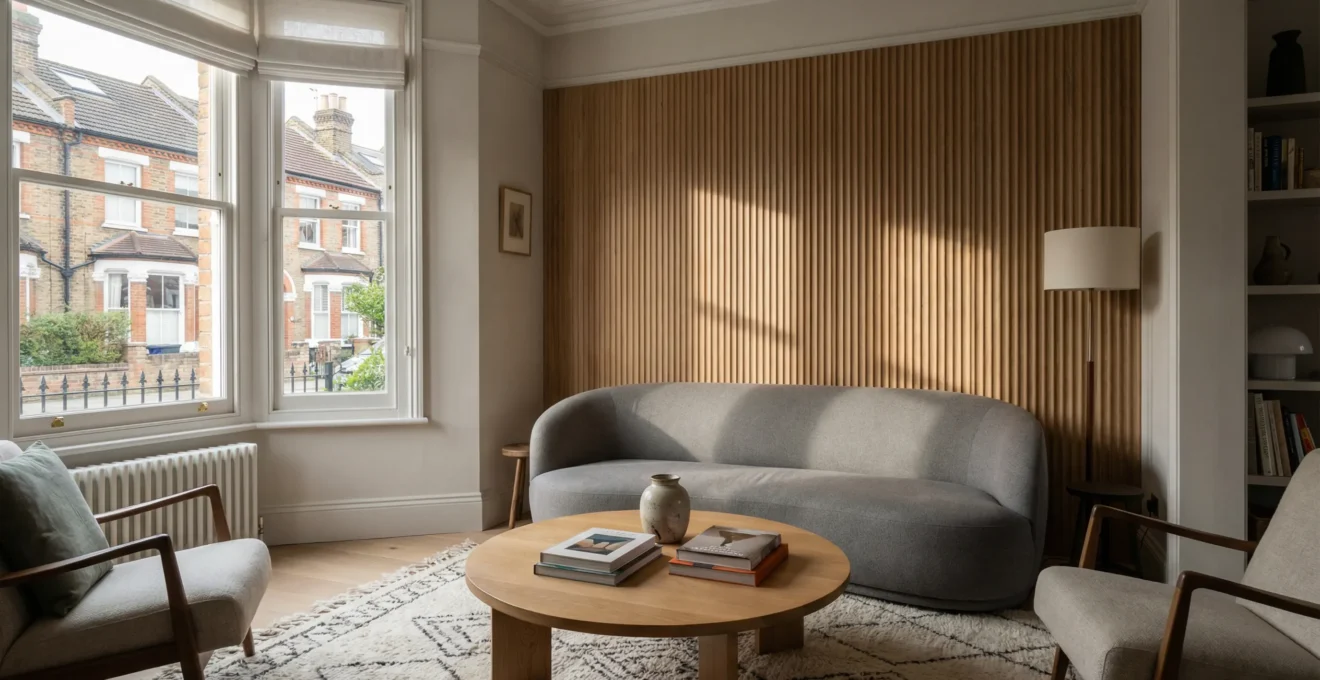
Most renovation guides obsess over panel material. Wood or composite? PVC or MDF? Yet the choice that actually shapes how a room feels—the profile geometry—rarely gets a mention. A smooth flat panel and a deeply fluted one might share identical materials. Install them side by side, and the difference in atmosphere is striking. One whispers understated calm; the other demands attention with shifting shadows. Understanding this distinction before ordering anything saves both money and regret.
The profile principle in 30 seconds
- Profile depth controls shadow intensity—deeper grooves create bolder visual movement
- Four main families exist: fluted, V-groove, chamfered, and flat (each transforms light differently)
- North-facing and narrow spaces often perform better with shallower profiles
- Vertical lines lift perceived ceiling height; horizontal lines widen compact rooms
What follows breaks down why profile geometry deserves your attention first, introduces the four families you will encounter, and provides practical guidance for matching profiles to your specific rooms. Frankly, this is the conversation I wish more homeowners had before committing to a supplier.
For those also weighing other surface options, you may find useful context in the facing plate for an authentic touch—particularly if authenticity matters more than uniformity in your project.
Why Profile Shape Matters More Than You Think
Walk into any room with wall panels, and your eye does not register the substrate. It reads light and shadow. Those shadows come from one thing: profile depth. A flat panel reflects light uniformly. A grooved or ridged panel catches and releases light across its surface, creating visual texture that shifts as you move or as daylight changes angle throughout the day.
This is not abstract theory. On renovation projects across South East England, I have watched clients fixate on colour samples while ignoring the profile geometry entirely. The result? Rooms that photograph beautifully in controlled lighting yet feel oddly flat in person. The wall « works » technically but lacks presence.
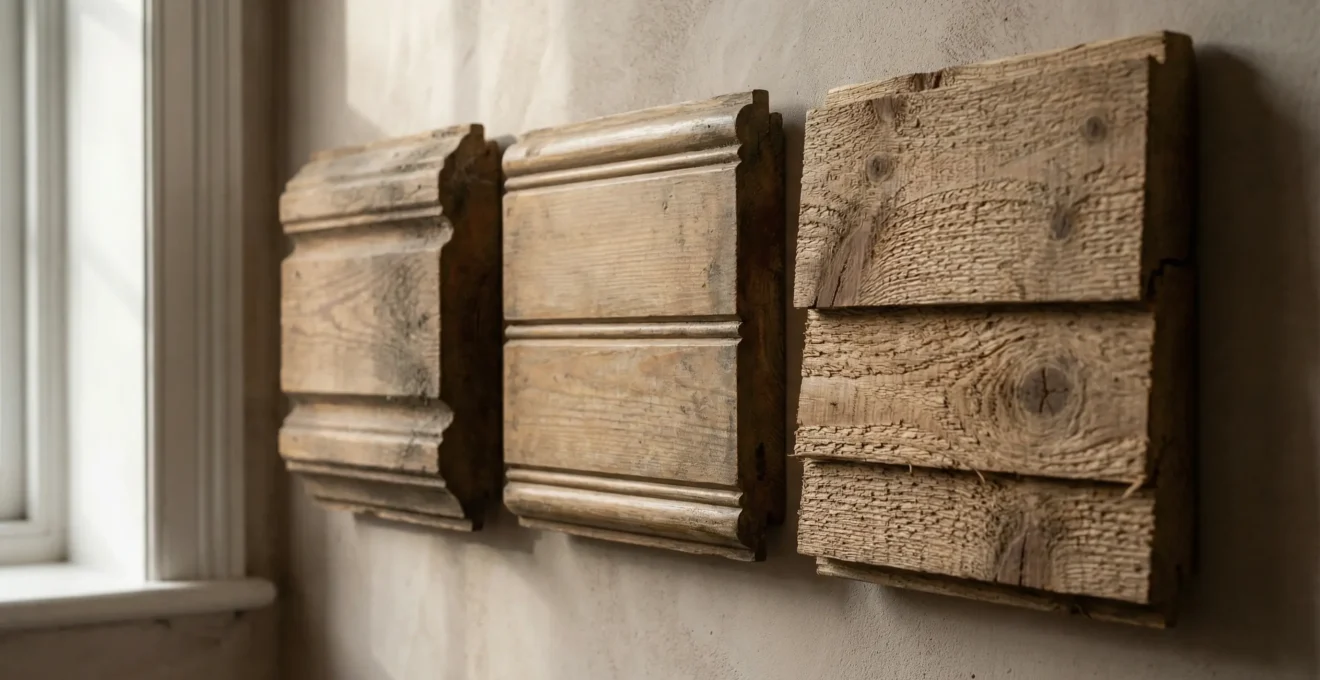
The mechanism is straightforward. Light hits a surface at an angle. Flat surfaces bounce it back predictably. Profiled surfaces—whether fluted, grooved, or chamfered—create thousands of tiny angle changes. Each ridge or valley catches light differently. The brain reads these variations as depth, texture, and visual interest. When sourcing quality decorative wood panel options, the profile specification matters as much as the material composition itself.
Why regulations matter here: According to UK Planning Portal regulations, when 25 per cent or more of an external wall is re-clad, building regulations apply and thermal performance requirements kick in. This affects panel selection for exterior-adjacent applications and ensures your chosen profiles meet current standards.
The practical takeaway? Before comparing material specs or costs, decide what shadow behaviour you want. Bold and architectural? Subtle and refined? Clinical and minimal? Your answer narrows the profile options dramatically.
Four Profile Families That Transform Any Room
Not every grooved panel performs identically. The construction industry has settled on four dominant profile families, each with distinct behaviour under light. Think of them as personality types rather than technical categories—each brings a recognisably different mood to any space.
The comparison below focuses on light interaction and practical application rather than material properties. For most residential projects, these distinctions matter more than whether the substrate is MDF or composite.
Profile comparison data current as of January 2026.
| Profile Type | Shadow Character | Best Room Types | Maintenance | Visual Effect |
|---|---|---|---|---|
| Fluted | Deep, rhythmic shadows that shift with light angle | Statement walls, spacious lounges, commercial foyers | Dust settles in grooves; requires periodic brushing | Contemporary, architectural, visually commanding |
| V-Groove | Sharp linear shadows with defined edges | Traditional interiors, hallways, wainscoting applications | Easier to wipe; less dust accumulation in shallow grooves | Classic, structured, works vertical or horizontal |
| Chamfered | Gentle gradients rather than hard shadow lines | Bedrooms, north-facing rooms, compact spaces | Minimal maintenance; smooth transitions collect less debris | Sophisticated, subtle texture without visual weight |
| Flat | No shadow play; relies entirely on colour and finish | Minimalist schemes, backdrops for artwork, utility spaces | Easiest to clean; shows scuffs more readily | Clean, recessive, deliberately understated |
My strong recommendation? For profiled designs, composite materials outperform natural timber in dimensional stability. This matters when shadows are involved. Timber expands and contracts with humidity changes; those movements distort shadow lines over time. WPC and engineered alternatives hold their geometry better, keeping shadow behaviour consistent year after year.
According to acoustic texture research from ASI Architectural, textured and slatted panels also bring acoustic benefits: rough or irregular surfaces scatter sound energy, reducing unwanted resonance. The deeper the profile, the more pronounced this effect—though dedicated acoustic panels remain necessary for serious noise concerns.
Matching Profiles to Room Function and Light
Selecting a profile without considering the room is like choosing paint in the dark. What works brilliantly in a south-facing lounge can feel oppressive in a narrow north-facing corridor. The variables that matter most: available natural light, room dimensions, and intended atmosphere.
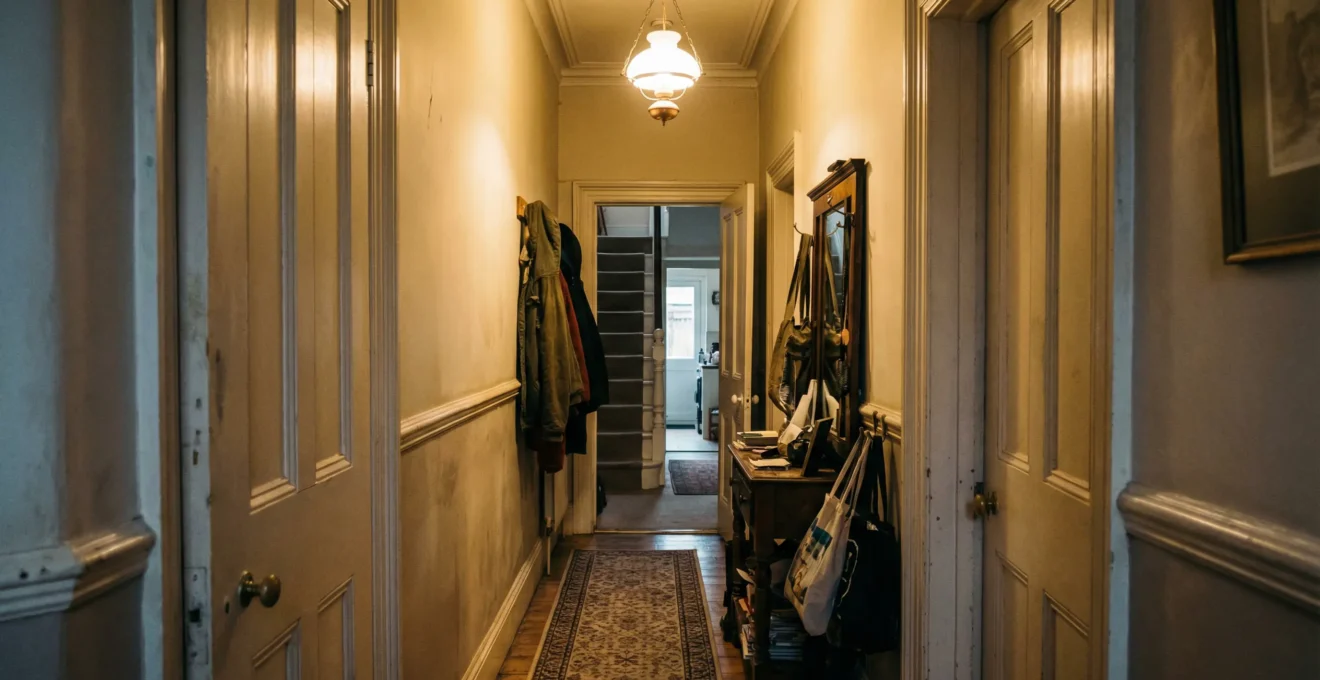
Lesson from a Guildford hallway project
I consulted with Sarah, a marketing director renovating a Victorian terrace in Surrey. She initially selected deep V-groove panels for a narrow hallway—visually striking in the showroom. Installed, the deep grooves created harsh shadow lines that made the corridor feel oppressive rather than welcoming. We switched to a shallow chamfered profile. Same material, same colour, completely different result. The softer shadow transitions opened the space visually without sacrificing texture entirely.
The mistake I see most often? Homeowners choosing flat smooth panels for north-facing rooms with limited natural light, expecting a clean look. Without directional light to create any visual interest, these spaces end up feeling clinical. Several clients later spent £400-800 on accent lighting to compensate—money better invested in the right profile choice upfront.
Which profile suits your room?
- If your room faces south or west with abundant natural light:
Deep fluted profiles reward you with dynamic shadow play that evolves throughout the day. Go bold.
- If your room is north-facing or receives limited daylight:
Shallow chamfered profiles add texture without creating dark shadow pockets. Avoid deep grooves.
- If your room is narrow (hallway, galley kitchen, cloakroom):
Horizontal V-groove installation widens the perceived space. Keep groove depth under 10mm.
- If you want ceiling height emphasis:
Vertical fluted or V-groove profiles draw the eye upward. This works even in modest-height rooms.
Practical advice: Request physical samples and test them against your actual room lighting at different times of day. Showroom conditions never match domestic reality. Three days with samples taped to your wall reveals more than any photograph.
Your Questions About Wall Panel Profiles
After working through profile selection with dozens of clients, certain questions surface repeatedly. These address the concerns I hear most often.
Do profiled panels require more maintenance than flat ones?
Yes, but the difference is manageable. Deep fluted profiles collect dust in grooves and benefit from monthly brushing with a soft attachment. V-groove and chamfered panels need less attention. Flat panels show fingerprints and scuffs more readily, trading one maintenance concern for another.
Will deep profiles make my room feel smaller?
Not necessarily. Shadow depth can add visual richness that makes walls feel more substantial—which sometimes increases perceived quality rather than reducing space. Problems arise when deep profiles create heavy shadow lines in already dark or cramped rooms. In those cases, shallower options work better.
Are certain profiles more fire-safe than others?
Profile shape itself does not determine fire performance—that depends on material composition and any applied treatments. However, British Standard BS 9991:2024 updated requirements for fire safety in residential buildings from November 2024. Verify any panels meet current classifications, especially for high-rise or commercial applications.
Can I install profiled panels over existing plasterboard?
In most cases, yes. Lightweight composite panels bond or fix directly over sound plasterboard. Deep profiles add minimal projection—typically 8-15mm—which rarely causes issues with skirting or architrave alignment. Check specific product fixing requirements and ensure the existing surface is stable.
Profile selection connects naturally to broader surface finish decisions. If you are weighing panel options alongside other wall treatments, exploring the criteria for choosing plaster helps establish which approach suits your project goals.
Your next step before ordering
Profile selection checklist
- Photograph your room at three different times of day to assess natural light direction
- Request physical samples of at least two profile depths in your shortlisted colour
- Test samples against actual room lighting for 48-72 hours before committing
- Confirm fire rating compliance if installing in flats or near heat sources
Profile geometry is the decision that keeps working long after installation day. Colour can be refreshed. Materials can be upgraded. But the shadow character you build into your walls—the way light moves across surfaces morning to evening—becomes part of how the room feels permanently. Spend the time upfront. Get it right once.